

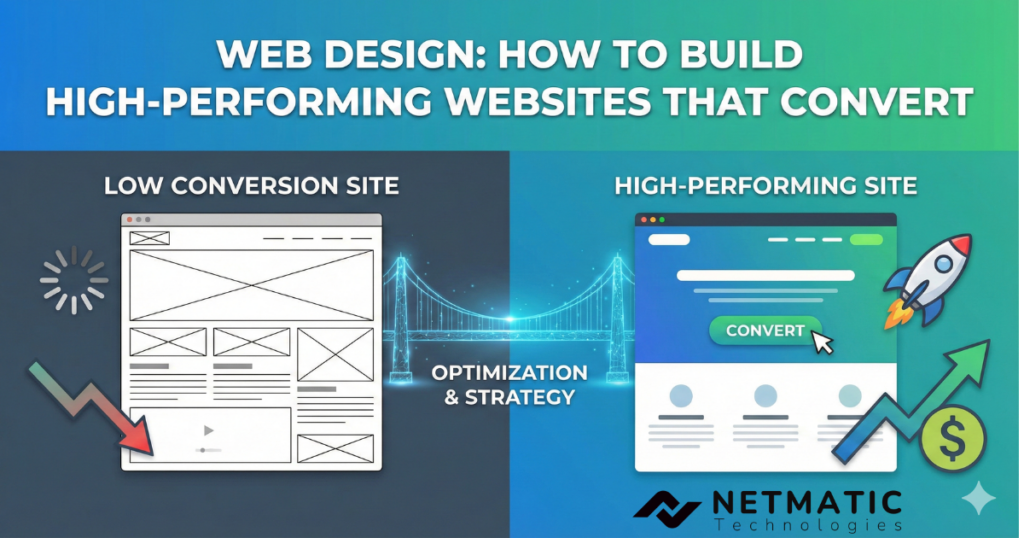
Web design today is not just about making a website look good. It’s about creating a fast, clear, and trustworthy experience that helps users understand your value and take action. When design, content, and performance work together, your website becomes a growth asset instead of a brochure.
This guide breaks down what modern web design includes, what matters most for conversions, and how to choose the right platform for your business goals.
What Web Design Means Today
Modern web design blends visual design, user experience, content structure, accessibility, and performance. Great design reduces friction, builds credibility, and guides visitors toward the next step.
If your branding feels inconsistent, your design will struggle to convert. Web design works best when it’s aligned with a clear brand system and messaging.
Related: digital branding strategy
Why Web Design Matters for Business Growth
Your website is often the first “sales conversation” a customer has with your brand. A high-performing design increases trust and improves the chances that users will contact you, request a quote, or book a call.
- Stronger first impressions and credibility
- Clearer messaging and positioning
- Higher engagement and lower bounce rates
- More leads and better conversion rates
- Better long-term performance across marketing channels
Core Elements of Effective Web Design
Visual Hierarchy and Layout
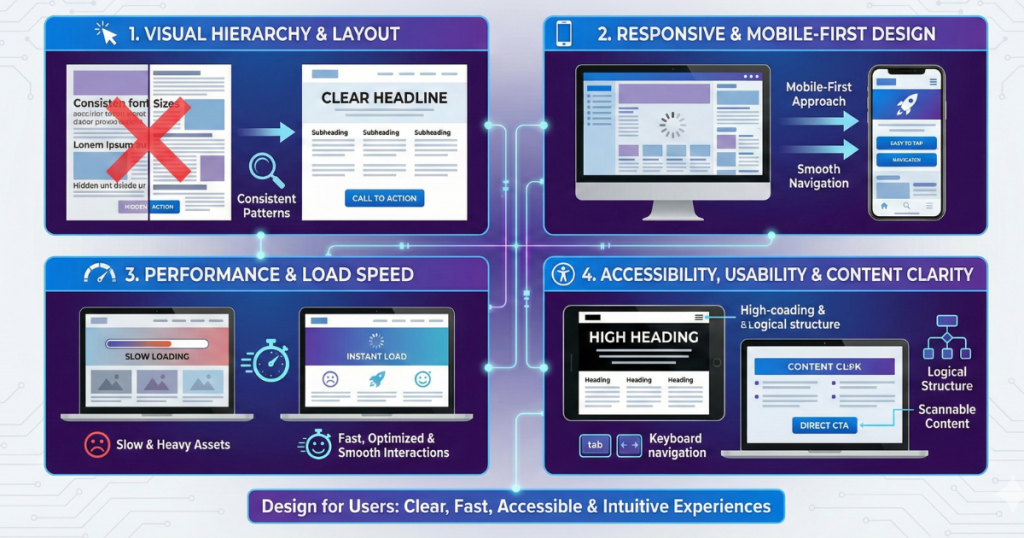
Users scan before they read. Strong hierarchy uses spacing, typography, and layout to make key messages obvious. Clear sections, consistent patterns, and readable content help users move through the page confidently.
Responsive and Mobile-First Design
Most users will see your website on mobile first. Mobile-first design ensures your layout, navigation, and CTAs work smoothly on smaller screens without sacrificing clarity.
Performance and Load Speed
Speed is a design feature. Faster sites feel more professional and reduce drop-offs. Performance-focused design avoids heavy assets, improves layout stability, and keeps interactions smooth.
Accessibility and Usability
Accessible design improves usability for everyone. Good contrast, readable type, logical structure, and keyboard-friendly components reduce friction and expand your audience.
Content Structure and Clarity
Design supports content, not the other way around. Strong websites use clear headings, short paragraphs, scannable bullets, and direct CTAs to make decisions easier.
Web Design and Conversion Optimization
High-converting websites make the next step obvious and reduce uncertainty. Conversion-focused design usually includes:
- Clear value proposition above the fold
- Strong primary CTA and supporting secondary CTA
- Trust signals like testimonials, logos, reviews, and case studies
- Simple forms and low-friction contact paths
- Consistent messaging across sections and pages
If you want a complete service-led approach, start here: web design services
Web Design and SEO
Design impacts SEO through user experience signals and site structure. A well-designed site improves engagement, supports clear navigation, and makes it easier for search engines to understand your content.
- Better structure and internal linking
- Mobile-first compatibility
- Improved page experience and performance
- Stronger trust and credibility signals
For deeper optimization beyond design, explore our SEO services.
Choosing the Right Web Design Platform
The best platform depends on your team, goals, and how you plan to manage content over time. Below are common options we design and build around, depending on what you need.
WordPress Web Design
WordPress is flexible, scalable, and excellent for marketing websites with strong SEO foundations. It’s ideal when you need custom layouts, reusable components, and long-term control.
Explore: WordPress design services
Webflow Web Design
Webflow is a great fit for design-led marketing teams who want speed, control, and a clean visual editing experience. It’s ideal for modern sites where design precision matters.
Explore: Webflow design services
HubSpot Website Design
HubSpot is ideal when your website needs to connect tightly with CRM, marketing automation, and lead tracking. It works well for growth-focused teams running campaigns and nurturing funnels.
Explore: HubSpot website design
Framer Website Design
Framer is excellent for sleek, modern sites with fast iteration cycles. It’s a strong option for startups and teams that prioritize speed, design, and rapid updates.
Explore: Framer design services
E-commerce Website Design
E-commerce design focuses on product discovery, trust, and checkout conversion. Strong UX patterns, performance, and clear merchandising make a big difference in revenue.
Explore: e-commerce design services
Common Web Design Mistakes to Avoid
- Designing for aesthetics without clear goals or user flow
- Overloading pages with animations, heavy media, or cluttered layouts
- Weak messaging and unclear CTAs
- Inconsistent spacing, typography, and visual style across pages
- Ignoring performance and mobile usability
How to Approach Web Design the Right Way
The best web design outcomes come from a structured process:
- Start with goals, audience, and positioning
- Build a clear site structure and page strategy
- Design layouts that support messaging and conversion
- Develop with performance, responsiveness, and accessibility in mind
- Measure results and improve over time
Final Thoughts
Web design is one of the highest-leverage investments a business can make online. When design is built for clarity, trust, and performance, it drives better leads, stronger engagement, and long-term growth.
If you want a website designed to look great and perform even better, NetMatic Technologies can help.
Contact us to get started with Web Design or Book a Discovery Call