

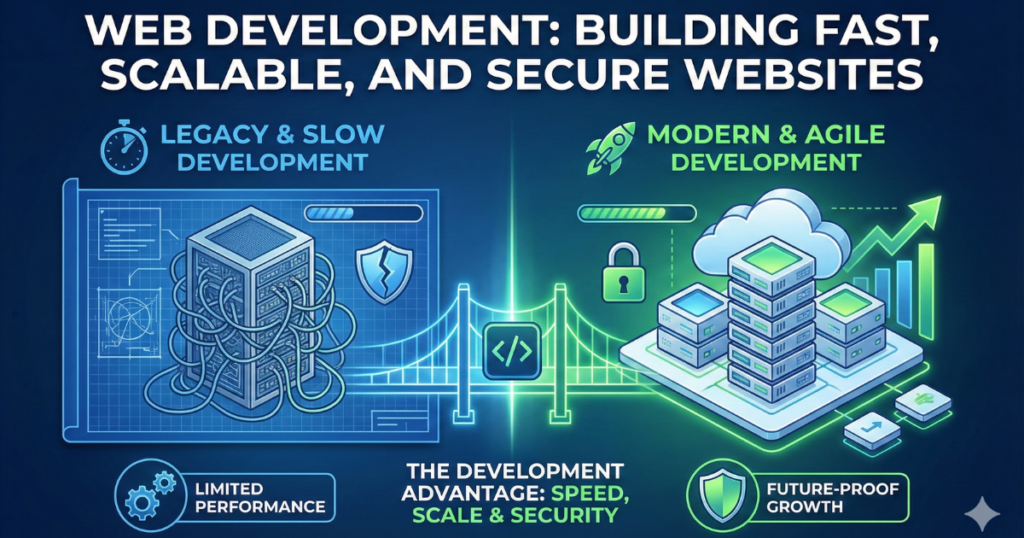
Web development is the process of turning a website strategy and design into a real, functional experience that loads fast, works on every device, and scales with your business. Great development is not only about code quality. It’s about performance, security, accessibility, and maintainability so your website stays reliable as traffic and content grow.
This guide explains what modern web development includes, what matters most for performance and scalability, and how to choose the right approach for your website.
What Web Development Means Today
Modern web development combines front-end and back-end work to build experiences that are clean, fast, and stable. It includes layout implementation, responsive behavior, performance optimization, SEO-friendly structure, and integrations that support marketing and operations.
When web development is done well, users get a smoother experience and search engines can crawl and understand your site more effectively.
Why Web Development Quality Matters for Business Growth
Development impacts how your site performs, how secure it is, and how easy it is to maintain over time. A slow or unstable website costs leads, weakens trust, and makes every marketing effort less effective.
- Faster load times and better engagement
- More reliable user experience across devices
- Stronger security and reduced risk
- Improved maintainability and easier updates
- Better support for SEO and conversion performance
If you want a service-led build focused on speed and scalability, start here: web development services.
Core Components of Modern Web Development
Front-End Development
Front-end development controls what users see and interact with. It includes layout, responsiveness, typography, components, and interactive elements. Strong front-end work focuses on clarity, accessibility, and stable layouts that feel consistent across browsers and devices.
Back-End Development
Back-end development powers the systems behind the scenes, such as CMS logic, databases, content modeling, and integrations. A strong back end helps your team manage content efficiently and supports long-term scalability.
Performance Optimization
Performance is a development responsibility. Great builds minimize unnecessary scripts, optimize images and assets, reduce layout shifts, and keep pages responsive. Faster sites typically convert better and provide a stronger user experience.
Security and Reliability
Security includes keeping software updated, reducing vulnerabilities, enforcing strong access controls, and protecting forms and data. Reliable builds also account for backups, monitoring, and predictable deployments.
Scalability and Maintainability
Scalable development makes it easy to expand your website without breaking structure or performance. Maintainable builds rely on reusable components, clean content models, and a consistent system that your team can operate over time.
Web Development and SEO
SEO depends on more than keywords. Development affects crawlability, page experience, mobile performance, structured layouts, and internal linking. A well-developed site supports SEO by making pages fast, stable, and easy to understand.
- Clean site structure and navigation
- Mobile-first performance and responsiveness
- Improved page experience and load speed
- Consistent templates and scalable content
If you need deeper search performance beyond development foundations, explore our SEO services.
CMS Builds vs Custom Builds
Many businesses choose between a CMS-driven build and a more custom development approach. The best choice depends on how often you update content, how complex your website is, and what your team needs to manage internally.
When a CMS Makes Sense
A CMS is ideal when you need frequent content updates, marketing pages, and scalable publishing. It supports long-term growth when content structure is planned properly.
When Custom Development Makes Sense
Custom development is a strong choice when you need unique functionality, custom workflows, advanced integrations, or a highly tailored experience that goes beyond standard patterns.
WordPress as a Development Platform
WordPress remains one of the most flexible platforms for marketing-focused websites because it can scale from simple content sites to complex builds with custom content modeling and performance-focused development.
If WordPress is your platform, our team builds fast, scalable sites with clean structure and long-term maintainability. Explore: WordPress design and development.
Common Web Development Mistakes to Avoid
- Building without a scalable structure or content model
- Overloading pages with heavy scripts and unoptimized assets
- Ignoring performance until after launch
- Weak security practices and outdated plugins
- Inconsistent templates and hard-to-maintain layouts
How to Approach Web Development the Right Way
The best development outcomes come from a structured process that connects strategy, design, and implementation:
- Define goals, users, and site requirements
- Plan content models, templates, and reusable components
- Build with performance, accessibility, and responsiveness in mind
- Implement security best practices and reliable workflows
- Measure performance and improve continuously after launch
Final Thoughts
Web development is what makes a website truly perform. A well-built site loads fast, stays secure, scales with your business, and supports both SEO and conversion outcomes over time.
If you want a website built for speed, stability, and growth, NetMatic Technologies can help.
Contact us to get started with Web Development or Book a Discovery Call