

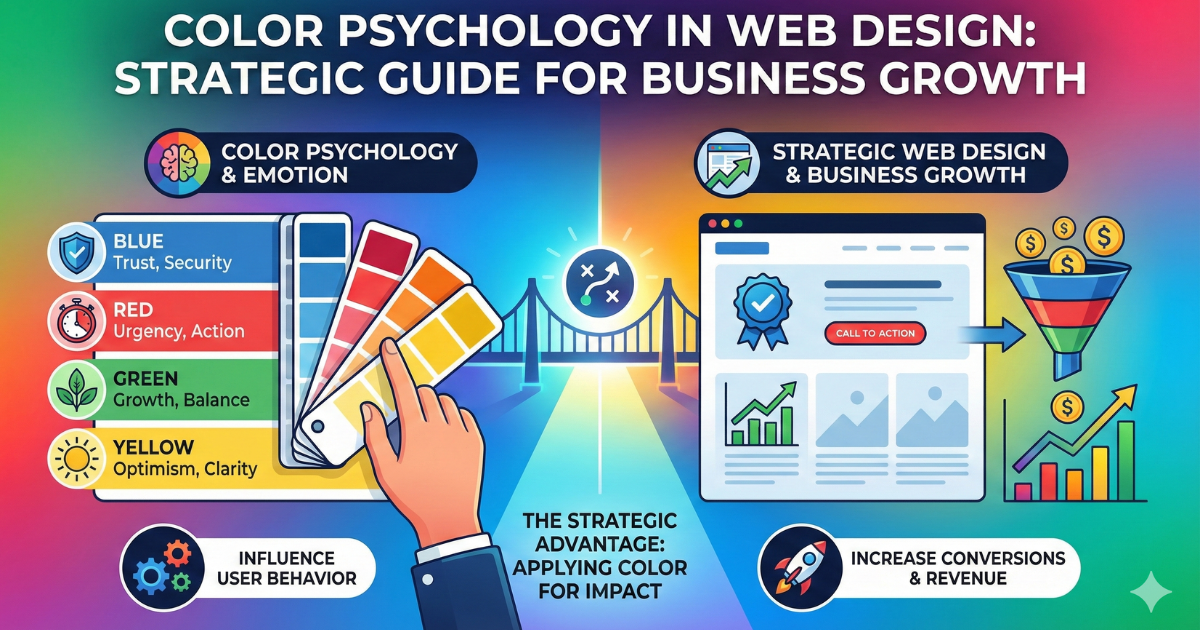
Color psychology in web design has evolved beyond aesthetic choices to become a sophisticated conversion optimization tool that directly impacts business results. In 2025, strategic color implementation can increase conversion rates by 15-85%, influence brand perception, and create competitive advantages that drive measurable revenue growth.
Color choices are most effective when they’re part of a broader web design strategy that considers usability, branding, and conversion goals together.
At NetMatic Technologies, we’ve analyzed color performance across over 180 marketing websites throughout the Greater Toronto Area, revealing that data-driven color strategies increase conversion rates by an average of 42% while strengthening brand positioning and user trust. Our “designers who think like developers” approach combines psychological principles with performance data to optimize business outcomes.
This comprehensive guide reveals how strategic color implementation drives business growth through increased conversions, improved brand differentiation, and enhanced user experiences that translate to measurable ROI.
How Color Psychology Impacts Business Performance
Strategic color implementation influences customer behavior, purchasing decisions, and brand perception in ways that directly affect business revenue and competitive positioning.
Conversion Rate Optimization: Color choices can increase or decrease conversion rates dramatically. Red call-to-action buttons often increase conversions by 21%, while strategic color contrast improvements can boost form completion rates by 35% or more.
Brand Trust and Credibility: Professional color schemes build immediate trust and establish credibility that influences purchasing decisions, especially for high-value services where trust drives customer acquisition.
Emotional Engagement: Colors trigger emotional responses that influence customer decision-making processes, creating psychological connections that support relationship building and customer loyalty development.
Competitive Differentiation: Strategic color choices help businesses stand out in crowded markets while communicating unique value propositions through visual brand language that competitors cannot easily replicate.
Data-Driven Color Strategy for Marketing Websites
Effective color implementation requires systematic approach based on user behavior data, industry research, and continuous optimization rather than personal preferences or generic color theory.
Conversion-Focused Color Selection: High-performing marketing websites use color strategically to guide attention toward conversion elements, create visual hierarchy, and reduce friction in customer decision-making processes.
Industry-Specific Color Psychology: Different industries require unique color approaches based on customer expectations, trust requirements, and competitive landscapes that influence psychological associations.
Target Audience Alignment: Color preferences vary significantly across demographics, geographic regions, and cultural backgrounds, requiring research-based color selection for optimal audience resonance.
Performance Measurement: Successful color strategies include systematic testing and optimization based on actual conversion data, user behavior analytics, and business performance metrics rather than subjective design preferences.
Color Implementation for Maximum Conversions
Strategic color implementation goes beyond basic color theory to create sophisticated user experiences that guide visitors through conversion paths while building trust and reducing purchase hesitation.
Call-to-Action Color Optimization
High-Contrast Button Design: Effective CTA buttons use colors that contrast sharply with surrounding elements while maintaining brand consistency. Orange and green CTAs often outperform other colors, but testing reveals optimal choices for specific audiences.
Color Urgency Psychology: Red creates urgency and immediate action, orange communicates confidence and enthusiasm, while green suggests safety and progression through conversion processes.
Progressive Color Hierarchy: Color intensity and saturation guide users through information consumption and decision-making stages, from attention-grabbing headlines to confidence-building conversion elements.
Trust Signal Color Strategy
Professional Color Schemes: Blue-based color palettes build trust and credibility, especially for financial services, healthcare, and professional services where reliability influences purchasing decisions.
Security and Safety Colors: Green communicates safety and security, making it effective for form submissions, payment processes, and trust badges that reduce conversion anxiety.
Authority and Expertise Colors: Deep blues, sophisticated grays, and professional color combinations establish expertise and authority that support premium pricing and competitive differentiation.
Brand Psychology Through Strategic Color Selection
Color choices communicate brand personality, positioning, and values in ways that influence customer perception and competitive advantages in meaningful business ways.
Brand Differentiation Strategy: Unique color combinations help businesses stand out from competitors while creating memorable brand experiences that support word-of-mouth marketing and customer retention.
Premium Positioning: Sophisticated color palettes communicate quality and professionalism that enable premium pricing while attracting higher-value customers who appreciate design excellence.
Industry Authority: Professional color implementation demonstrates design sophistication and attention to detail that builds credibility with potential clients and industry partners.
Emotional Brand Connection: Strategic color choices create emotional associations that influence customer loyalty, brand affinity, and long-term relationship development beyond purely rational purchasing factors.
Technical Color Implementation for Business Websites
Professional color implementation requires sophisticated technical knowledge and systematic approach that ensures consistency, accessibility, and optimal performance across all devices and platforms.
Color System Architecture
Scalable Color Variables: Professional websites use CSS custom properties and design systems that enable consistent color implementation and efficient maintenance across large websites and multiple projects.
Brand Color Guidelines: Comprehensive color specifications including hex codes, RGB values, CMYK conversions, and usage guidelines ensure brand consistency across digital and print applications.
Responsive Color Adaptation: Color schemes that work effectively across different screen sizes, device types, and viewing conditions while maintaining brand recognition and usability standards.
Accessibility and Inclusive Design
Color Contrast Compliance: WCAG accessibility standards require specific contrast ratios between text and background colors, ensuring readability for users with visual impairments while maintaining design aesthetics.
Color-Blind Considerations: Effective color strategies work for users with various types of color vision deficiencies, using color combinations and design elements that ensure usability for all visitors.
Alternative Communication Methods: Professional designs never rely solely on color to communicate important information, incorporating icons, text labels, and other visual cues that support comprehensive understanding.
A/B Testing Color Performance for Optimization
Systematic color testing enables data-driven optimization that improves conversion rates and business performance through evidence-based design decisions rather than assumptions.
Button Color Testing: Testing different CTA button colors can reveal significant conversion rate differences. Red vs. green buttons, blue vs. orange alternatives, and contrast level variations often produce surprising results.
Page Color Scheme Testing: Overall page color schemes affect user perception, trust levels, and engagement metrics that influence conversion rates and business outcomes measurably.
Brand Color Optimization: Testing different brand color implementations helps identify combinations that maximize both brand recognition and conversion performance for optimal business results.
Seasonal Color Adaptation: Testing seasonal color variations and holiday-specific adaptations can improve conversion rates during high-traffic periods while maintaining brand consistency.
Industry-Specific Color Strategy Implementation
Different industries require unique color approaches based on customer psychology, competitive landscapes, and business objectives that affect color strategy effectiveness.
Healthcare and Medical: Blue and green color schemes build trust and communicate safety, cleanliness, and professional competence that patients expect from healthcare providers.
Financial Services: Conservative blue and gray palettes establish reliability and trustworthiness essential for financial decision-making, while avoiding colors that suggest risk or instability.
Technology and SaaS: Modern color schemes using blues, teals, and sophisticated accent colors communicate innovation and technical expertise while maintaining professional credibility.
Professional Services: Sophisticated color combinations establish authority and expertise while differentiating from competitors using generic or template-based color schemes.
E-commerce and Retail: Color strategies that encourage purchasing decisions through psychological triggers while building brand recognition and shopping confidence across customer touchpoints.
Measuring Color Impact on Business Results
Effective color strategy requires systematic measurement and analysis to optimize performance and demonstrate return on investment through data-driven decision making.
Conversion Rate Analysis: Track conversion rate changes following color optimizations to measure direct business impact and identify the most effective color combinations for specific objectives.
Brand Recognition Metrics: Monitor brand awareness, recognition, and recall metrics to evaluate how color choices affect brand perception and competitive positioning over time.
User Engagement Tracking: Analyze bounce rates, time on page, and user interaction patterns to understand how color choices affect user experience quality and engagement levels.
Revenue Attribution: Connect color optimization efforts to actual revenue generation through customer lifetime value analysis, average order value changes, and sales conversion improvements.
Common Color Strategy Mistakes That Hurt Business
Understanding and avoiding common color mistakes prevents lost conversion opportunities and ensures color investments deliver maximum business value and competitive advantage.
Personal Preference Decisions: Choosing colors based on personal preferences rather than target audience research and performance data often reduces conversion rates and business effectiveness.
Trend-Following Without Strategy: Implementing trendy colors without considering brand identity, audience preferences, or business objectives can damage brand consistency and user experience.
Insufficient Contrast: Poor color contrast between text and backgrounds reduces readability, hurts accessibility compliance, and can significantly impact conversion rates and user satisfaction.
Inconsistent Brand Implementation: Using different color schemes across marketing materials, website pages, and customer touchpoints weakens brand recognition and professional credibility.
Lack of Testing: Assuming color choices are optimal without systematic testing misses opportunities for significant conversion rate improvements and business growth.
How do colors affect website conversion rates?
Colors significantly impact conversion rates through psychological influence on user behavior. Strategic color choices can increase conversions by 15-85%, with red CTA buttons often improving performance by 21% and high-contrast color schemes boosting form completions by 35% or more through improved visual hierarchy and reduced decision friction.
What colors build the most trust for business websites?
Blue is consistently the most trusted color for business websites, especially in financial services, healthcare, and professional services. Navy blue conveys reliability and expertise, while lighter blues suggest friendliness and accessibility. Green also builds trust by communicating safety and security, particularly for conversion actions and payment processes.
Should call-to-action buttons be red or green?
Neither color is universally better—optimal CTA button color depends on surrounding design, target audience, and specific context. Red creates urgency and immediate action, while green suggests safety and progression. Testing different colors against your specific design and audience provides the most reliable optimization insights.
How do you choose colors for professional service websites?
Professional service websites should use sophisticated color palettes that establish authority and expertise. Navy blue, deep gray, and professional accent colors work well. Avoid overly bright or casual colors that undermine credibility. Consider industry expectations, target audience preferences, and competitive differentiation when selecting professional color schemes.
What colors work best for healthcare and medical websites?
Healthcare websites perform best with blues and greens that communicate trust, cleanliness, and safety. Blue establishes medical professionalism and reliability, while green suggests health and healing. White backgrounds with blue accents create clean, clinical aesthetics that patients expect from healthcare providers.
How often should website colors be updated or changed?
Website colors should remain consistent for brand recognition but can be optimized through testing. Major color changes should only occur during rebranding or significant strategic shifts. However, continuous A/B testing of specific color elements like CTA buttons can improve performance without affecting overall brand consistency.
Do color preferences vary by industry or target audience?
Yes, color preferences vary significantly by industry, demographics, culture, and context. B2B audiences often prefer conservative, professional colors, while B2C markets may respond better to vibrant, emotional colors. Age, gender, cultural background, and industry expectations all influence color effectiveness and should guide strategic color selection.
How do you measure the business impact of color choices?
Measure color impact through conversion rate analysis, A/B testing results, user engagement metrics, brand recognition surveys, and revenue attribution. Track specific metrics like CTA click-through rates, form completion rates, time on page, and customer acquisition costs to evaluate how color optimizations affect business performance.
Optimize Your Color Strategy for Maximum Business Impact
Strategic color implementation represents a powerful but often underutilized opportunity to improve website performance, strengthen brand positioning, and increase conversion rates. The difference between random color choices and data-driven color strategy can mean the difference between mediocre and exceptional business results.
Professional color strategy requires understanding of psychology, technical implementation expertise, and systematic optimization approach that most businesses cannot effectively manage internally. By investing in strategic color optimization, companies create competitive advantages while improving user experience and conversion performance.
Ready to optimize your color strategy for maximum business impact? NetMatic Technologies combines color psychology expertise with conversion optimization and technical excellence. Our data-driven approach ensures your color choices support both brand objectives and measurable business results.
Contact NetMatic today for a comprehensive color strategy analysis and optimization plan that drives real business growth through strategic design decisions.