
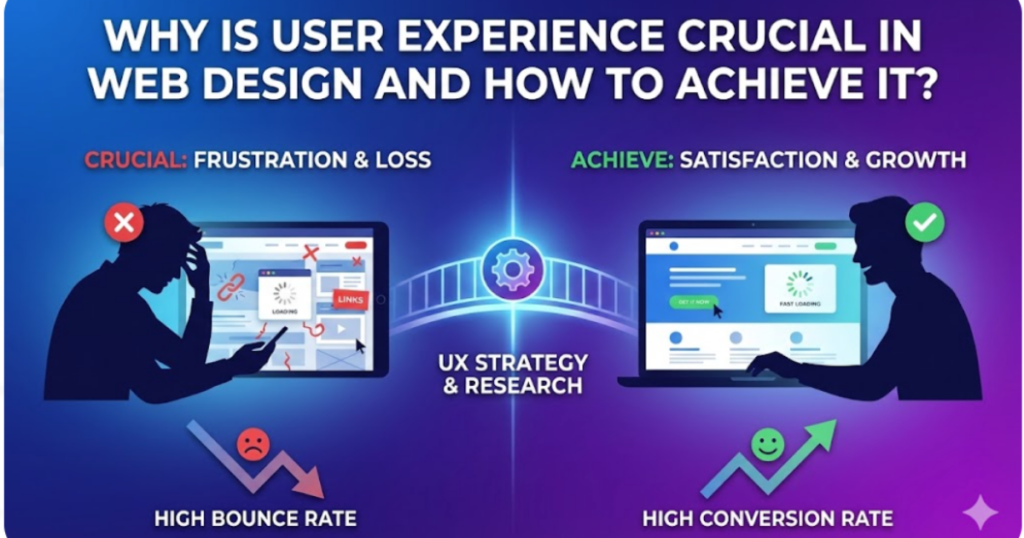
Why is User Experience Crucial in Web Design and How to Achieve It?

  • Web Design
  • Web Design
Why is User Experience Crucial in Web Design and How to Achieve It?

When it comes to web design, user experience (UX) is a crucial factor that can make or break the success of your website. A seamless and engaging user experience not only keeps visitors on your site longer but also encourages them to take desired actions, such as making a purchase or submitting a contact form. At NetMatic Technologies, we understand the significance of user experience in web design, and in this article, we will explore why it is crucial and how you can achieve it for your website.

The Importance of User Experience in Web Design:

User experience encompasses every interaction that users have with your website, including its usability, accessibility, and overall satisfaction. Here are some key reasons why user experience is crucial in web design:

  1. Enhanced User Satisfaction: A website with a well-designed user experience provides visitors with a seamless and enjoyable browsing experience. When users can easily find the information they need, navigate intuitively, and perform desired actions without frustration, it leads to higher user satisfaction.
  2. Improved Engagement and Conversions: A positive user experience encourages visitors to stay longer on your website and engage with your content. When users find your website visually appealing, easy to navigate, and responsive across different devices, they are more likely to convert into leads or customers.
  3. Building Trust and Credibility: A website that prioritizes user experience demonstrates professionalism, reliability, and credibility. Users are more likely to trust and engage with a website that is user-friendly, accessible, and provides value through relevant and high-quality content.

How to Achieve an Optimal User Experience:

  1. User-Centric Design: Understand your target audience and their needs to design a website that caters to their preferences and expectations. Conduct user research, create user personas, and consider user feedback to inform your design decisions.
  2. Intuitive Navigation: Ensure that your website has clear and intuitive navigation, allowing users to easily find the information they are looking for. Use logical menu structures, breadcrumbs, and internal links to guide users through your website.
  3. Responsive and Mobile-Friendly Design: With the increasing use of mobile devices, it’s crucial to have a responsive website that adapts seamlessly to different screen sizes. Optimize your website for mobile devices to provide a consistent and enjoyable experience for users on the go.
  4. Page Load Speed: Users expect fast-loading websites, so optimize your website’s performance to minimize page load times. Compress images, enable browser caching, and optimize code to enhance overall speed.
  5. Consistent Branding and Visual Appeal: Maintain consistent branding elements throughout your website to create a cohesive and memorable user experience. Use visually appealing design elements, typography, and colors that align with your brand identity.

User experience plays a central role in creating high-performing web design that keeps users engaged and moving toward conversion.

NetMatic Technologies: Enhancing User Experience for Your Website:

At NetMatic Technologies, we specialize in creating exceptional user experiences through thoughtful web design strategies. Our team of experts understands the importance of user-centric design, intuitive navigation, responsive layouts, and visual appeal. We work closely with our clients to understand their target audience and business goals, delivering websites that engage visitors

Ready to Build Your New Website?

Schedule a free 15-minute discovery call. No pressure, just strategy.

Frequently Asked Questions

Why is user experience important for a business website?

UX determines whether visitors stay, engage, and convert — or leave immediately. A site that frustrates users costs you leads and revenue, regardless of how much traffic you drive to it. Good UX also signals professionalism and builds trust, which is particularly important for service businesses where the relationship starts long before first contact.

What are the most common UX mistakes on business websites?

The most common are: burying the contact action too far down the page, using jargon that visitors don’t recognize, designing for desktop while ignoring mobile, using slow-loading images and video, having unclear CTAs, and building navigation that makes it hard to find services. Most of these are invisible to the business owner but obvious to an outside user.

How do I improve UX without a full website rebuild?

Start with the highest-traffic pages and work backward from your conversion data. Common quick wins: clearer CTA button text and placement, simplified navigation, faster image loading, improved headline clarity above the fold, and shorter forms. You can often double conversion rates through targeted UX improvements before a full redesign is warranted.

How does UX design affect customer retention, not just acquisition?

Beyond first conversions, UX affects return visits, referral likelihood, and customer satisfaction. A client who found your website easy to use is more likely to refer others. Repeat visitors return because the experience was worthwhile. Poor post-conversion UX (complicated portals, confusing processes) erodes the trust built in the sales stage.

What's the ROI of investing in UX for my website?

The returns vary by baseline and industry, but research from Forrester found that every $1 invested in UX returns $100 on average. More practically: improving conversion rate from 1 percent to 2 percent on a site receiving 1,000 monthly visitors doubles your lead volume with zero additional traffic cost. UX improvements often have the best ROI of any digital investment.

Share post on:

Frequently Asked Questions

Explore the answers to your most pressing questions with our comprehensive FAQ section.

UX determines whether visitors stay, engage, and convert — or leave immediately. A site that frustrates users costs you leads and revenue, regardless of how much traffic you drive to it. Good UX also signals professionalism and builds trust, which is particularly important for service businesses where the relationship starts long before first contact.

The most common are: burying the contact action too far down the page, using jargon that visitors don’t recognize, designing for desktop while ignoring mobile, using slow-loading images and video, having unclear CTAs, and building navigation that makes it hard to find services. Most of these are invisible to the business owner but obvious to an outside user.

Start with the highest-traffic pages and work backward from your conversion data. Common quick wins: clearer CTA button text and placement, simplified navigation, faster image loading, improved headline clarity above the fold, and shorter forms. You can often double conversion rates through targeted UX improvements before a full redesign is warranted.

Beyond first conversions, UX affects return visits, referral likelihood, and customer satisfaction. A client who found your website easy to use is more likely to refer others. Repeat visitors return because the experience was worthwhile. Poor post-conversion UX (complicated portals, confusing processes) erodes the trust built in the sales stage.

The returns vary by baseline and industry, but research from Forrester found that every $1 invested in UX returns $100 on average. More practically: improving conversion rate from 1 percent to 2 percent on a site receiving 1,000 monthly visitors doubles your lead volume with zero additional traffic cost. UX improvements often have the best ROI of any digital investment.

You may also like

Expert advice on Web Design trends, SEO strategies, and digital growth.

Stop Reading. Start Growing.

Stop losing leads to competitors with outdated websites. Let’s build a platform that grows your business.

Black X symbol on green.

Let's Build Something Great.

Drop us your project details and we'll get back to you within 24 hours.